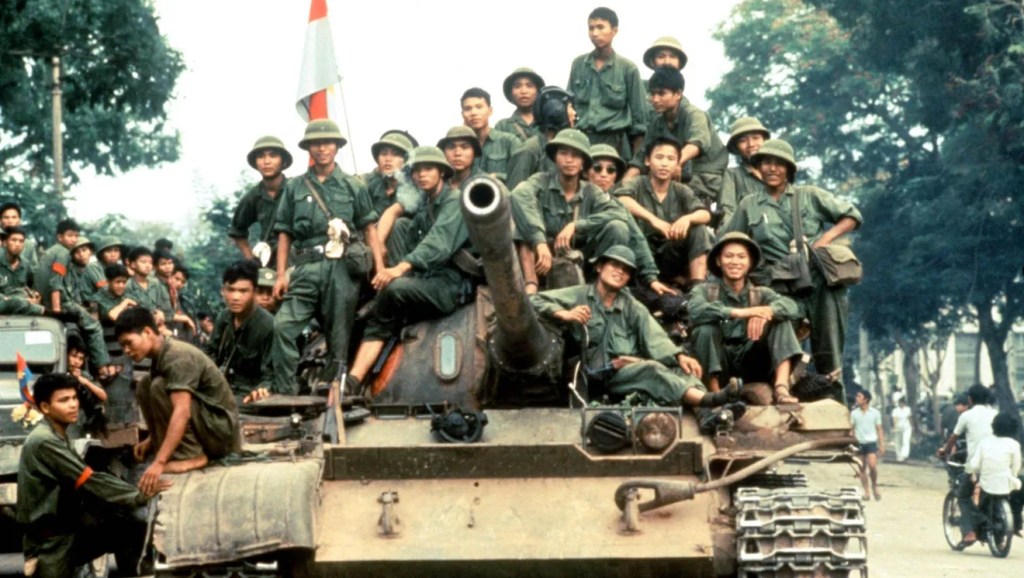
The Vietnam War is essentially viewed as an American-Vietnamese affair. This couldn’t be further from the truth. Support and supplies came from all over the globe for both the South and North Vietnamese efforts. There were dozens of nations all over the globe aiding one side or the other. These nations had ideological leanings across the spectrum, each with their own interpretation of loyalty to Moscow or Washington. Some saw it as mission to secure regional stability, others a means to improve their prestige with the larger powers, and still others who simply saw compatriots in need of assistance. This article is the second in a series discussing the nature of the two major partnerships of the Vietnam War and will focus on highlighting the military aid provided by Moscow led axis in North Vietnam. For the American led coalition, read part one.
The nature of coalitions suggests that informal partnerships rule the day, but the presence of formal allies operating together within the coalition is not forbidden by any means. The Americans, Australians and New Zealanders were all part of ANZUS, but did not invoke the treaty to jointly aid the South Vietnamese. The same can be said of the Warsaw Pact. Not entirely analogous to ANZUS, but certainly a formal alliance system that saw its members aid an outside nation, without committing the structures of that system to the coalition.
Most aid to North Vietnam started in 1954, but this was primarily economic in nature until the 1960s. Even then, military equipment and advisors did not pour in until well into that decade. Unlike the South Vietnamese, who had little discretion in the types and amount of aid supplied to them by the coalition of Free World Forces, Hanoi was much more independent. As well, there were two competing sponsors who sent the vast majority of the aid, and a host of smaller Communists countries that gave according to their own programs of priorities. These three camps were led by the USSR, the PRC, and the independent countries of the Communist orbit, including some members of the Warsaw Pact.
Much like the US led efforts to aid the Republic of Vietnam in Saigon, aid to the Democratic Peoples Republic was not without strings attached. The Chinese especially were keen on gaining something for their efforts, especially as Chinese nationalism was experiencing another wave of rejuvenation in the wake of the successes of the 1950s. Entire books can be written about the dynamic between Hanoi and Beijing in these years, but we will focus on the aid delivered from 1964 to 1975. Let us begin with the PRC’s contributions.
The PRC had supported the Viet Minh after the Second World War and continued to support them as the First Indochina War gripped the region. Advisors and aid flowed in large quantities. However, no fighting troops were sent as the PRC was busy with their massive involvement in the Korean War. In 1954, Zhou Enlai encouraged Ho Chi Minh to sign the Geneva Accords. Aid focused on rebuilding North Vietnam’s economy increased in the following years. A mainstay of this aid was technicians in addition to material aid and financing for large infrastructure projects.
1964 saw the beginning of a real program of military aid to North Vietnam that would eclipse all previous efforts. A squadron of MIG-17’s was sent to help defend Hanoi’s airspace, and training programs for DRV pilots by their Chinese compatriots were set up. A military delegation from the DRV was sent to coordinate plans with the PRC. No less a figure than Mao himself promised the delegation that “Chinese forces would cross the border . . . as volunteers.”, in the event that the US invaded North Vietnam. The PRC sent 80,000 small arms, 25,000,000 rounds of ammunition, and 1200 artillery pieces of various calibers during 1964.
As the American involvement began to exceed all expectations in the wake of the Gulf of Tonkin Incident, Chinese aid efforts were redoubled. The two countries signed five separate treaties outlining aid of almost every conceivable type before the year was out. One of the most interesting was a highway construction project. This treaty tasked the Chinese with building 12 separate highways with a total length of the 1785 km. Additionally, the PRC sent Hanoi’s government sent significant amounts of foreign currency to use in international trade. This was vital for much of the civilian market stuffs that the Chinese either could not manufacture or spare for the growing war effort. As the war progressed, Beijing sent engineers to help construct airfields, barracks and coastal defense facilities.
Military aid in 1965 saw a massive increase as China tried to go all out in its efforts to out-compete the USSR and help the DRV fend off what it saw as an imminent American invasion. More than weapons and supplies, engineers and anti-artillery units were sent to help defend the country. Eventually over 300K Chinese Soldiers would rotate through the country. At the same time, large amounts of troops were dispatched to the border with North Vietnam. These were to be prepared in the event the Americans pushed through Hanoi’s army. This is fundamental to understanding Chinese motivations for aid to North Vietnam. At its core the PRC was still worried that the Americans were trying to attack the periphery in an attempt to isolate them, paving the way for a Nationalist invasion. The PRC had thwarted this in Korea, but at enormous cost and for little more than a status quo ante bellum. They could only view Vietnam as the next iteration of this plan by the Americans.
At the end of 1966, it was clear that China would have to scale back its commitments to North Vietnam. The only thing that could be given without hesitation was manpower for the advisory, engineering and anti-aircraft efforts. It is notable that the although the PRC was making enormous efforts to support the civilian and industrial buildup of the DRV, these paled in comparison to that being spent in South Vietnam by the US. However, these were not equal relative efforts. China was in the middle of a vast internal restructuring and still solidifying the state in the wake of the devastation of World War Two and the Chinese Civil War. The US was the preeminent military superpower and the greatest economic power the world had ever seen. The difference in power was evident in the amount and types of aid that flowed to the respective halves of Vietnam. The PRC was rapidly trying to build up its own military and diplomatic independence from the USSR. This meant that while the PRC competed with them on aid deliveries to Hanoi, there was inherent instability in the aid program. Chinese equipment aid was often limited to small arms and ammunition, relatively simple to produce on industrial scales.
Unlike the PRC, the USSR had a relatively mature economy and weapons industry. As well, in the middle of maybe the hottest period of the Cold War, the USSR could not hesitate to aid a country fighting its principal ideological foe. However, certain obstacles stood in the way of this aid. Not least of these was the tyranny of geography. More than three thousand miles separated the closest points of the Soviet Union and North Vietnam. Land and air routes were controlled by the PRC. As the Sino-Soviet relationship deteriorated throughout the 1960’s it became increasingly difficult to get permission from Beijing to fly and rail supplies through Chinese territory. This meant that throughout the war, the primary means of arrival for aid from the Soviet Union was shipping. The vast majority of this arrived through the port of Haiphong, while smaller ports such as Cam Pha and Hon Gai were used for economic exports from the DRV.
The types of aid delivered from the Soviet Union were fundamentally different than that sent at the command of Beijing. This of course was rooted in the different economic situations of the countries, but also because Hanoi asked for different things of the two partners. From Moscow flowed the latest in surface to air missiles (SAMs), radars, and anti-aircraft artillery (AAA). Technicians were sent by the thousands to help set up, maintain and deploy this equipment as a coherent integrated air defense network. Eventually, this system would rival any in the world for its effectiveness and complexity. There were multiple layers, consisting of warning and targeting radars, short- and long-range SAMs and large and small caliber AAA. Soviet soldiers also helped train Hanoi’s operators in sophisticated tactics and years of experience allowed People’s Army of Vietnam (PAVN or NVA) to develop their own unique employment ideas.
Besides the ground-based air defense, at least three generations of Soviet fighters were sent to help defend the airspace of North Vietnam. The MIG-17,-19, and -21 all served with distinction at various times. The USSR transferred MIG-21’s proved to be of limited use, but they did work effectively at times when employed correctly. Hanoi’s air force struggled to match the sophistication and overwhelming force the US Air Force and Navy brought to the table, but there were minor victories that would not have been possible without the MIG-21’s.
The ground forces were not neglected by Moscow. Tanks, artillery, and more were sent by the thousands over the years to help equip Hanoi’s army. This build up was demonstrated by the conventional attacks of the 1968 Tet Offensive. Khe Sanh was invested by two divisions of the NVA, and they were lavishly equipped with Soviet made D-20 152mm howitzers, 130mm M-46 field guns, 122mm rockets and mortars of all sizes. The US Marine Corps estimated that there were at least 100 guns of various sizes present and they fired over 10,000 shells at the base during the course of the siege. The number of shells fired is relatively low, and most likely should be contributed to the tactical logistics of the besiegers, not stockpile shortages or shortcomings in deliveries by the PRC or USSR. As a point of comparison, the US fired something in the order of 150,000 rounds. The NVA struggled to bring significant heavy ammunition across the border because they had no clear supply lines nor the equipment to deliver it across the rough terrain of the border.
Perhaps more interesting than material deliveries is the level of intelligence and what we now call special operations forces training and assistance that was provided to Hanoi. The war in Vietnam is often seen as the birthplace of American special operations forces, but those men did not operate in a vacuum. The Soviet Union had a long history of irregular military forces doing infiltration and reconnaissance work, and that legacy was continued in Vietnam. There is little declassified information about this area of the war and much remains locked behind archival doors. However, we do know that the KGB helped set up what was called the “Vostok” project to help the North Vietnamese set up their signals intelligence group focusing on three areas: radio intelligence, radio counterintelligence and secure communications. This was done in cooperation with the Ministry of State Security, the KGB’s counterpart in the government of DRV. It is of course, unclear how far these efforts went, or how effective they were.
In addition to the efforts led by the KGB, the GRU sent officers to assist the NVA with military focused intelligence. There are two concrete examples where we know that the GRU partnered with the NVA. The first was in the observation and data collection of American air tactics. Soviet intelligence officers and pilots, among others, debriefed NVA efforts at air defense, both from anti-aircraft and fighter perspectives. It has also been long established that GRU officers participated in the interrogation of American POW’s, especially pilots. Pieces of downed US aircraft were also shipped back to the Soviet Union for analysis.
There is not much evidence that the Soviet Union helped to train infiltration teams, and frankly, it would be surprising if this happened. The DRV had one of the worlds best human intelligence networks in the world in place in South Vietnam and needed little help on this front. What was needed was advanced technology and equipment to support these infiltrators, and that was exactly the level of support the USSR was capable and willing to give to Hanoi.
There have been allegations that intelligence gained from the John Walker spy ring was passed on by the Soviets to their allies in the DRV. This is unsubstantiated and there remains little evidence that this happened.
As it was, the Soviets were not the only ones engaged in helping Hanoi’s fledging intelligence efforts. The German Democratic Republic (GDR) had developed an early relationship with the DRV. By the middle of the 1960’s this had blossomed into full-on cooperation, specifically in the arena of internal security and counterintelligence work. The Easter German Ministry for State Security, or Stasi, were eager to train and equip the internal security forces of the DRV.
Military aid from East Germany, as with all of the Warsaw Pact countries, was limited. It is hard to find definitive accounts of what military aid came from whom, among the Pact members. At this point, I’ve been unable to even find a cursory breakdown of ANY military aid sent from the Pact to the DRV, though I would be surprised to learn that no accounting at all exists. Contemporaneous CIA reports speak broadly of small arms ammunition deliveries worth a few million dollars, but little else. In 1968 there was unconfirmed suspicion that a few dozen Czech produced OT-62 APCs had been delivered to the North Vietnamese, but there is little evidence that more than this was directly supplied from the Warsaw Pact.
Training Vietnamese pilots was a concern that eventually attracted serious attention from the Soviet Union and the PRC. There was little direct involvement from the Warsaw Pact, but Czech built trainers were supplied to the training bases in the Soviet Union. There, Vietnamese pilot cadets trained in cadres alongside but not with pact pilots. The training demonstrated that the Vietnamese were hard workers but often lacked the basic technical background of the more industrialized European cadets and thus had a much higher dropout rate. There was little that could be done to help this, but training times were extended where possible to give the Vietnamese cadets more time to familiarize themselves with the basic technical operation of the aircraft. Another measure taken to improve efficiency forced the pilot course dropouts to become ground crewman for the aircraft, thereby helping to fill two needs with one training course.
Pilot training also took place in the PRC, where they trained on the Mig-15 and -17 models. Soviet training focused at first on the -15 and -17 before eventually transferring to the Mig-21, the latest in Soviet jets. The first Mig-21’s didn’t see combat in Vietnamese hands until early 1966, as they countered Operation Rolling Thunder. They would go on to earn a fearsome reputation in the hands of the NVA.
Aside from military aid, members of the Warsaw Pact were eager to provide economic and humanitarian aid to Hanoi. Czechoslovakia, Hungary, Romania, Bulgaria had all established medical delegations to the country with significant aid flowing through these. Czechoslovakia and the GDR established hospitals in North Vietnam and funded them as well ensuring that there were significant connections with their own pharmaceutical and medical equipment industries. This medical aid was significant, both for the prosperity of all involved and the health of the North Vietnamese population. Within a half-decade of medical aid beginning from the Warsaw Pact countries, Malaria was all but eliminated in North Vietnam.
The Cubans involved themselves to an unknown degree in the war in Vietnam, and I can find little academic sourcing that tells what exactly the aid given was or how much of it was given. It has been alleged by several former POWs that they were tortured and interrogated by Cubans in Hanoi and there isn’t much reason to doubt these accounts. There is also a report in a Cuban communist newspaper that the Cubans sent specialists to help expand the Ho Chi Minh trail. I am not sure what value might have come from this, as the Vietnamese had no lack of experience using manual labor to carve out logistics paths in the Jungle. If it happened, it might have been a symbolic gesture to demonstrate socialist brotherhood if nothing else.
The differences in the types and amounts of aid that Hanoi received over the course of its war with Saigon are instructive in many ways. Perhaps first and foremost, it demonstrates that the DRV was not willing to become a puppet of any one sponsor. It can be guessed that Hanoi’s leaders they saw the situation in Saigon as it became ever entrenched into becoming a tool of American policy. Accepting American directed and led aid efforts, meant shaping their military not as a unique policy instrument to fit the needs of the Government, but as a force shaped by American wants, and the equipment and training the Americans were willing to give. Hanoi escaped this fate by two principal methods. The first was diversifying supplies to make sure that no one foreign country could hold the aid over Hanoi’s head. Yes, all the aid was essential, but no one source was mandatory. They played the PRC and USSR off of each other and gained some independence in the space between. Secondly, the DRV made sure to ask for specific things, never accepting wholesale aid programs to “build” their military into a copy of one thing or another. They bought rifles, not rifle company advisors. This resulted in meaningful differences in how they fought their war. The international coalition that backed the North Vietnamese Government was tailored to the needs and wants of the leaders of that government.
Compared to the model embodied by Saigon and D.C., it is too easy to come away and say the Hanoi operated the superior model of international coalition. This essay and part one, were not intended to give the reader a conclusion, but to give them ammunition for understanding different means of operating international coalitions. How the reader takes this and applies it to other situations is not really my territory. I would not necessarily draw conclusions about the coalitions that fought the wars in Syria, Iraq, or Afghanistan from these case studies. I do hope that there is some useful ideas in these pages. If nothing else one could come away with a better understanding of how the opposing coalitions in the Vietnam War operated.
References
Ahern Jr., T. L. (n.d.). The Way We Do Things: Black Entry Operations Into North Vietnam 1961-1964. Center for the Study of Intelligence.
Becker, S. (2015). Cold War in Asia: China’s Involvement in the Korean and Vietnam War. University of Kansas.
CIA. (1966). Chinese Communist Forces in Vietnam.
CIA. (1966). Soviet Bloc Aid to the DRV: Evidence of Tokenism and Dissension.
CIA. (1967). Communist Aid to North Vietnam 1967.
CIA. (1967). Peking Supplying Cargo Ships to North Vietnam.
CIA. (1967). The Dimensions of Soviet Aid to North Vietnam .
CIA. (1968). Communist Aid to North Vietnam 1968.
CIA. (1968). International Communist Aid to North Vietnam.
CIA. (1971). Hanoi, Tchepone, and Chinese Troops in North Vietnam: A Speculation.
CIA. (1973). Soviet and Chinese Aid to North Vietnam.
CIA. (1975). Communist Military and Economic Aid to North Vietnam 1970-1974.
Drenkowski, D. G. (n.d.). PATTERNS AND PREDICTABILITY: THE SOVIET EVALUATION OF OPERATION LINEBACKER II.
Edited By Muehlenbeck, P., & Telepneva, N. (2018). Warsaw Pact Intervention in the Third World: Aid and Influence in the Cold War. New York: Bloomsbury Academic.
Fox, R. P. (1976). Air Base Defense in the Republic of Vietnam 1961-1973. Washington, D.C.: Office of AIr Force History.
Grosshiem, M. (2026, April 10). Stasi Aid and the Modernization of the Vietnamese Secret Police. Retrieved from Wilson Center.
Horten, G. (2013). Sailing in the Shadow of the Vietnam War: The GDR Government and the “Vietnam Bonus” of the Early 1970s. Portland: Concordia University .
Ko, M. (2019). Comparison of Soviet Aid to North Korea and North Vietnam in the 1950’s and 1960’s. Journal of Peace and Unification , 63-86.
Li, X. (2019). Building Ho’s Army: Chinese Military Assistance to North Vietnam. Lexington: University Press of Kentucky.
Pribbenow II, M. L. (2014). The Soviet-Vietnamese Intelligence Relationship during the Vietnam War: Cooperation and Conflict. 2014: Wood Wilson International Center for Scholars.
Tho, P. D., & Ha, N. T. (2024). Evaluation of China’s Help to Vietnam in the Resistance War Against the United States (1954-1975). Romanian Journal of Historical Studies.
Toperczer, I. (2001). MiG-17 and MiG-19 Units of the Vietnam War. Oxford: Osprey Publishing .
Toperczer, I. (2001). MiG-21 Units of the Vietnam War. Oxford: Osprey Publsihing .
You, L. (2023). Hanoi’s Balancing Act: The Vietnamese Communists and the Sino-Soviet Split, 1960-1965. Journal of Cold War Studies, 64-92.
Zhang, S. X. (2019). Reassessment of Beijing’s Economic and Military Aid to Hanoi’s Awr, 1964-75. Cold War History.
 Inconvenient War studies
Leave a comment